
I am interested in the relationship between economic and political change and the ways that sudden transformations in a people’s social and material circumstances can generate new possibilities for collective action and environmental governance. This general interest has brought me to study pressing issues in international climate politics such as deforestation, land conflicts, and sustainable development, as well as local histories of extractivism and labor exploitation in the Brazilian Amazon. My work draws on a methodological toolkit that includes ethnography, life history interviews, ethnobiology, spatial analysis, and archival research. Through dialogue with historical ecologists and ethnohistorians, I’ve also developed an interest in the forms of plant and animal bioprospecting that accompanied the European colonization of key North and South American ecoregions and their implications for descendant communities today.

Amazon Developments: The Impacts of Public Policy on Rural Social Organization in Brazil’s Amazon Delta
This project examines the cumulative impacts of sustainable development and anti-poverty programs on rural farming, fishing, and agroforestry communities in Brazil’s Amazon delta. Since the early 1990s, the Brazilian government promoted an array of participatory development initiatives targeting small farmers and agroforesters. These policies, which include credit programs, land regularization initiatives, and payments for ecosystem services, led to an outpouring formal associations, village management committees, cooperatives, and social movements that lobby for access to funding and development resources. Supported by the US-Brazil Fulbright Commission and National Science Foundation Doctoral Dissertation Research Improvement Grant, this project examines the rise of local social movement organizations, their relationship to government development efforts, and their historical role in Amazonia’s broader environmental justice movement.

Transnational Grain Trading and the Forest’s New Fate
As Brazil’s agribusiness sector has become increasingly export-oriented, the Amazon has come to occupy an important crossroads for international supply chains in soybeans, corn, palm oil, and livestock. In recent years, private developers, corporations, and multilateral enterprises such as China’s Belt and Road Initiative have sunk substantial investments into Brazil’s so-called “Northern Arc”—a regional development scheme seeking to reconfigure the Amazon as a transnational shipping corridor for soybeans and corn. Throughout the region, social movements have staged targeted resistance to port construction efforts. However, the impacts of these investments on the dynamics of land speculation, the territorial rights of Indigenous and descendant populations, and deforestation remain poorly understood. Through a comparison with the historical development of agro-industrial trading along the US Mississippi River, this project will examine the global and local dynamics driving new agro-industrial investments in the Amazon and their implications for regional conservation efforts.
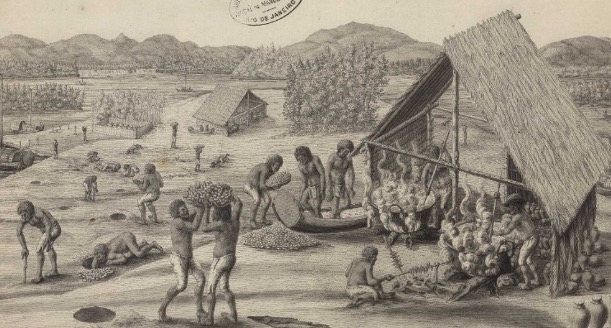
Colonial Bioprospecting in the North American Fur and Amazonian Drogas do Sertão Trades (1500-1850): A Comparative Natural History
Bioprospecting, or the search for biological materials for the purpose of commercial exploitation, played a decisive role in the European colonization of Amazonia and North America. In the Amazon, European merchants and missionaries drew on Indigenous labor and environmental knowledge in pursuit of the so-called drogas do sertão, or “drugs of the interior”: an ensemble of medicinal, food, and confectionary products extracted for sale to European and east Asian markets. These included plants, as well as animal hides and aquatic resources. This trade in tropical forest products paralleled the expansion of European powers across northern North America during the 17th and 18th centuries. As trading expanded from its origins along the St. Lawrence River, Indigenous peoples were enlisted into the production of animal pelts, shellfish, fish, and botanicals. Through collaboration with researchers in Brazil and Canada, this project will result in a comparative ethnoecological and ethnohistorical study of colonial bioprospecting in the North American fur and Amazonian “forest drugs” trades.
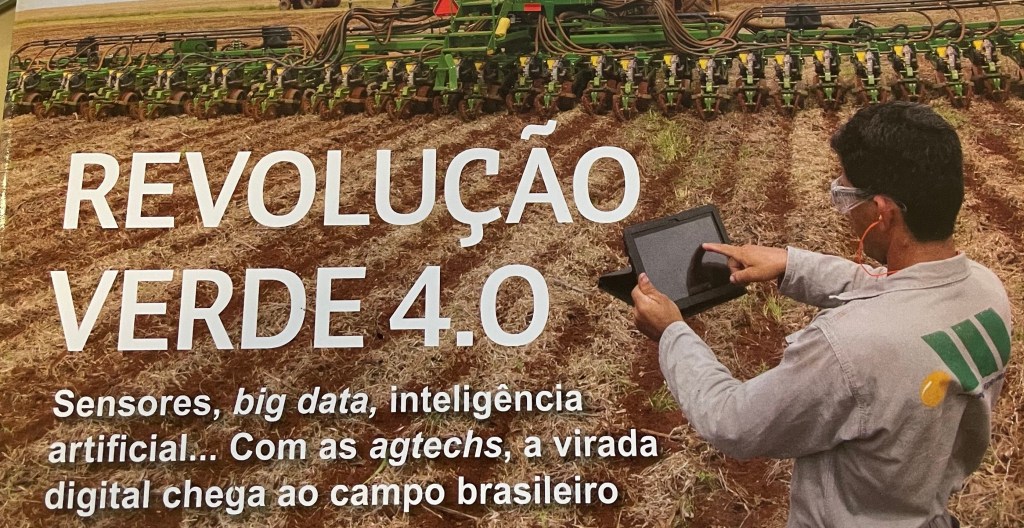
Pilot Comparative Research on Adoption of Digital Agricultural Technologies (Collaborator, PI: Glenn Stone)
This pilot study investigates the global diffusion of “digital agriculture” technologies in a variety of national contexts in order to identify key sites and questions for future research. Digital agriculture technologies have been present in industrialized countries since the 1990s and are increasingly being marketed as a tool for agrarian development in the Global South. This multi-investigator study seeks to refine a series of questions regarding the agronomic effects and social implications of these new technologies and their implications for different agrarian economies.
 Matt Abel