
My teaching philosophy is informed by my experiences auditing and participating in alternative pedagogy initiatives in Brazil. These programs, funded by the Brazilian government and with substantial social movement participation, aim to increase higher education opportunities among Amazonia’s farmers, agroforesters, African and Indigenous descendants, and other rural-dwellers. Having been influenced by experiential and problem-based learning programs at various stages of my life, I seek to combine pragmatist currents within the US educational tradition with Freirian principles of critical pedagogy and active learning.
I believe educational tools should be designed for adaptation, transformation, and re-evaluation. I’m more than happy to share course and teaching material. Please don’t hesitate to reach out at mwabel [at] smu.edu if you are teaching or developing a similar course.

ANTH291: Economic Anthropology (Visiting Assistant Professor, Kenyon College, FA2023)
How do societies meet their material needs? What do systems of exchange tell us about social relations, culture, and values? How do societies organize the production and distribution of goods in ways that reflect dominant power relationships and prevailing social hierarchies? Students in this course read widely across anthropology, sociology, and political economy to expand their understanding of economic systems across various social and cultural contexts. Through course projects and in-class exercises, students employ an historical and comparative approach to social analysis that engages substantively with the underpinnings of a diversity of non-capitalist economic systems. Students are also taught to relativize and interrogate the functioning of our own economy and the drivers of social inequality. This course serves as an introduction to economic anthropology, as well as a primer on the importance of social theory to economic and political thought.
ANTH261: Culture and Environment (Instructor of Record, Wash U, SU2022)
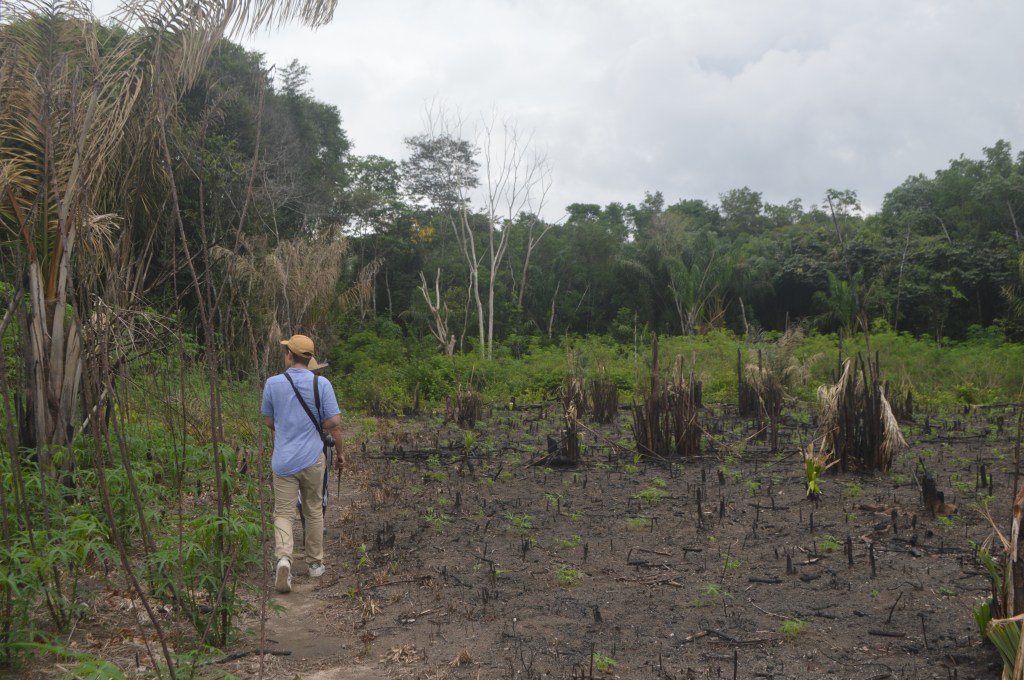
This course explores the relationship between human culture and the environment, with the unifying theme of population, food production, and politics. We discuss the social, ecological, and political aspects of food production systems from foraging to swidden cultivation, to intensive cultivation to industrial agriculture. Students learn to address questions of environmental sustainability and how different socio-ecological systems are altered by state and industrial interventions. Drawing on approaches from cultural ecology, environmental history, and agrarian studies, we explore case studies from West and East Africa, the Brazilian Amazon, China, India, New Guinea, and the Philippines. We also explore the ecological and political aspects of agribusiness and the ramifications of capitalist industrialization for rural and urban-dwellers throughout different parts of the world.

ANTH391: Agrarian Justice (Visiting Assistant Professor, Kenyon College, SP2024)
This course takes its name from a lesser-known pamphlet by the American revolutionary Thomas Paine and examines the ways in which agrarian social movements have articulated claims to justice and reform through competing visions of rural life. It begins by examining the role of the so-called “agrarian question” in the formation of nation-states under the first international food regime. It then examines the cultural ecology of small-scale intensive farming and impacts of mechanization, land concentration, and industrialization on rural communities. Key case studies include, among others, early attempts at interracial organizing in the cotton fields of the US South, migrant labor and the birth of California agribusiness, the global ramifications of the Mexican Revolution, and other twentieth century agrarian conflicts. We also examine the impacts of Green Revolution technologies on small-scale farmers and their relationship to contemporary processes of agricultural industrialization. For their final paper, students conduct independent research on a contemporary agrarian social movement or rural social problem to develop an in-depth analysis of the challenges posed to agrarian justice today.

ANTH113: Introduction to Cultural Anthropology (Visiting Assistant Professor, Kenyon College, FA2023/SP2024)
This course introduces core concepts, theories, and methods in cultural anthropology, one of the four branches of the discipline of anthropology that examines human societies and cultures in their variation and diversity. Students take a close look at the discipline’s history and some of the important intellectual interventions that continue to define cultural anthropology today. These conversations pivot around a constellation of guiding questions: How do we understand human beings as both biological and social organisms? What tools can we use to explain and understand human cultural diversity? Where does social inequality come from and through what mechanisms is it sustained? How do societies adapt to as well as transform their natural environment? And what can case studies tell us about broader social structures and their relevance to the human condition?
ANTH3097: Amazonia: Culture, Environment, History (Instructor of Record, Wash U, SU2023)
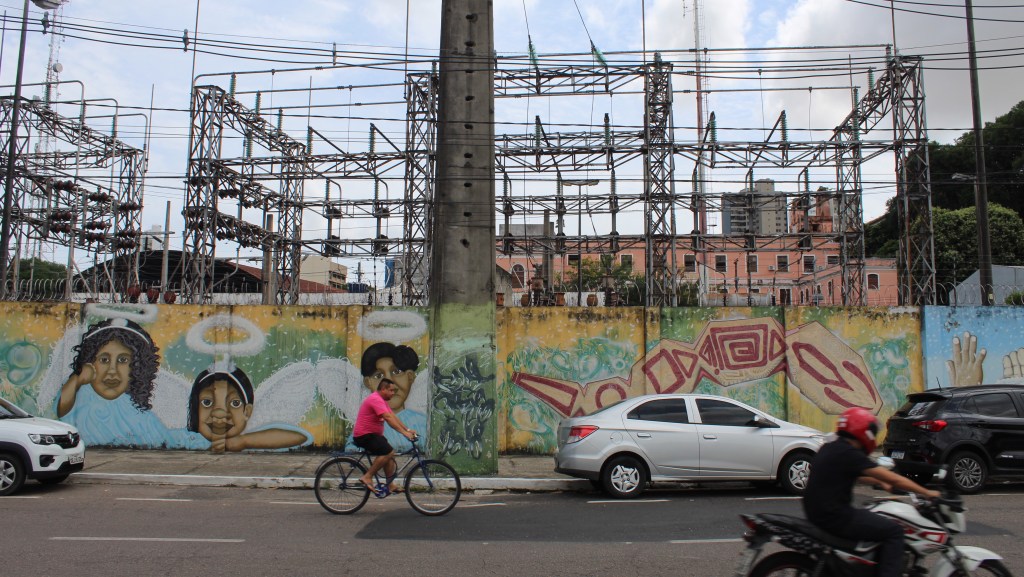
The Amazon basin encompasses large portions of nine different South American nations – Brazil, Bolivia, Peru, Ecuador, Colombia, Venezuela, Guyana, Suriname, and French Guiana – which together comprise one of the most important centers of cultural, linguistic, and ecological diversity in the world. From pre-Colombian mound-building to modern-day environmental movements, Amazonians have altered the course of world events through their engagements with a broader natural and social environment. This seminar surveys Indigenous, colonial, and post-colonial perspectives on the Amazon to recenter its residents as historical actors on the global stage. It provides students with an introduction to the historical materialist method of inquiry, as well as the utility of a regional perspective in understanding the drivers of contemporary socio-environmental change. Students engage critically with ethnographic and scholarly texts as a means of understanding the history and social organization of a key global region and its peoples.
ANTH3391/ECON2391: Economies as Cultural Systems (Instructor of Record, Wash U, SP2022)
This introductory course to economic anthropology and political economy draws on a diversity of disciplinary approaches to examine the social foundations of different economic systems across different cultures.
Latin American Social Theory Reading Group (Co-Founder, Wash U, FA2021/SP2022)
This graduate reading group was founded in 2020 by myself and fellow anthropologist Luisa Madrigal Marroquín. With funding from Wash U’s Center for the Humanities we co-coordinated an online speaker series in order to explore intellectual traditions often ignored in dominant European and Anglo-American renderings of canonical social theory. We focused specifically on the intellectual history and contributions of Latin American social thinkers to broader transnational conversations and debates. By creating an interdisciplinary group of humanities and social science researchers, we sought to discuss social theory from a multinational and epistemologically de-centered perspective that emphasizes the importance of social and humanistic inquiry to overlapping national and transnational publics.
Recent Guest Lectures
2023. “The Global CAFO and the South American Soy Boom.” Food, Culture, Power. Washington University in St. Louis.
2022. “Indigeneity and Labor History in the Amazon Delta.” Brazilian Cultures. Washington University in St. Louis.
2022. “Patron-client Relationships in the East Amazonian Public Health System.” Survey of Brazilian History. Colgate University.
2022. “Transnational Grain Traders and the Amazonian Aviamento.” Economic Anthropology. College of William & Mary.
 Matt Abel